The Canadian software architecture space is adjusting to new capital allocation mandates, infrastructure constraints, and sovereign compute policies. Driven by federal investments through Innovation, Science and Economic Development Canada (ISED) and major AI research hubs like Mila in Montreal and Amii in Edmonton, organizations are shifting away from commercial cloud dependencies toward open, verifiable, and locally hosted infrastructure.
According to recent benchmark data from Gartner and the DORA (DevOps Research and Assessment) report, technical leadership teams across Toronto, Vancouver, and Montreal are reprioritizing infrastructure resiliency, deterministic code generation, and low-latency asset pipelines over raw deployment frequency.
1. Federal Sovereign Compute Investments Accelerate Open-Source AI Infrastructure in Montreal and Edmonton
Canada’s federal government, through ISED’s CAD 2 billion AI Compute Infrastructure Strategy, has finalized major compute allocations targeting open-source AI consortia, including Mila (Montreal) and Amii (Edmonton). In partnership with domestic infrastructure providers like Hypertec and cloud operators across Quebec and Alberta, these initiatives mandate that models trained under public research grants utilize locally hosted, auditable hardware nodes.
For backend developers and cloud architects, this funding shift alters infrastructure procurement and system integration patterns. Enterprises are moving away from proprietary commercial APIs toward locally deployed open-source large language models hosted on sovereign cloud clusters.
- Self-Hosted Inference Clusters: Engineering teams are deploying vLLM and TensorRT-LLM runtimes on private Kubernetes nodes in Montreal data centers, bypassing third-party API rate limits and external data residency risks.
- Zero-Egress Data Architectures: Inbound payloads are processed entirely within Canadian availability zones, using locally hosted vector databases (such as Qdrant or Milvus) to enforce strict compliance with national privacy frameworks.
- FinOps and Hardware Efficiency: Backend engineers are tasked with optimizing model quantization (using AWQ and GGUF formats) to reduce GPU VRAM footprints, directly lowering infrastructure operating expenses.
2. Enterprise Adoption of Autonomous Agent Workflows Triggers CI/CD Pipeline Redesigns
The integration of multi-agent orchestration frameworks (such as AutoGen, LangGraph, and CrewAI) into enterprise software delivery pipelines in Ontario and British Columbia has introduced new testing and observability challenges. While autonomous agents accelerate complex code refactoring and automated test generation, production telemetry shows an increase in non-deterministic execution paths and unexpected recursive API loops.
Data from recent enterprise software stability audits reveals that unmonitored agentic workflows frequently introduce race conditions and subtle resource exhaustion bugs that evade traditional unit testing suites.
To maintain system reliability under agentic development workflows, engineering leads are implementing stricter integration boundaries:
- Deterministic Sandboxing: Agentic execution environments are isolated inside ephemeral WebAssembly (Wasm) or Docker containers with strict CPU, memory, and network execution quotas.
- Continuous Evaluation Gates: CI/CD pipelines now include automated evaluation frameworks (using tools like DeepEval or Ragas) to measure agent drift, hallucination rates, and code correctness prior to merge approval.
- Granular Telemetry and Tracing: DevOps teams are deploying OpenTelemetry instrumentation specifically configured to trace agent decision trees, token consumption metrics, and recursive tool execution.
3. Canadian Interactive Media Studios Shift Capital Toward Proprietary Toolchain Automation
Following structural changes in provincial media tax credits and broader consolidation across major studios, interactive entertainment companies in Montreal, Vancouver, and Toronto are redirecting capital away from bloated production teams toward custom toolchain automation. Studios are prioritizing internal pipeline tooling that automates asset ingestion, build validation, and cross-platform compilation.
Rather than maintaining expensive third-party middleware licenses or running monolithic, uncustomized commercial engines, studios with 30 to 100 employees are building modular, microservice-based asset processing pipelines.
- Low-Level Systems Engineering: Hiring demand has concentrated on C++20 and Rust developers capable of writing custom Unreal Engine 5 plugins, memory-efficient render passes, and automated build scripts.
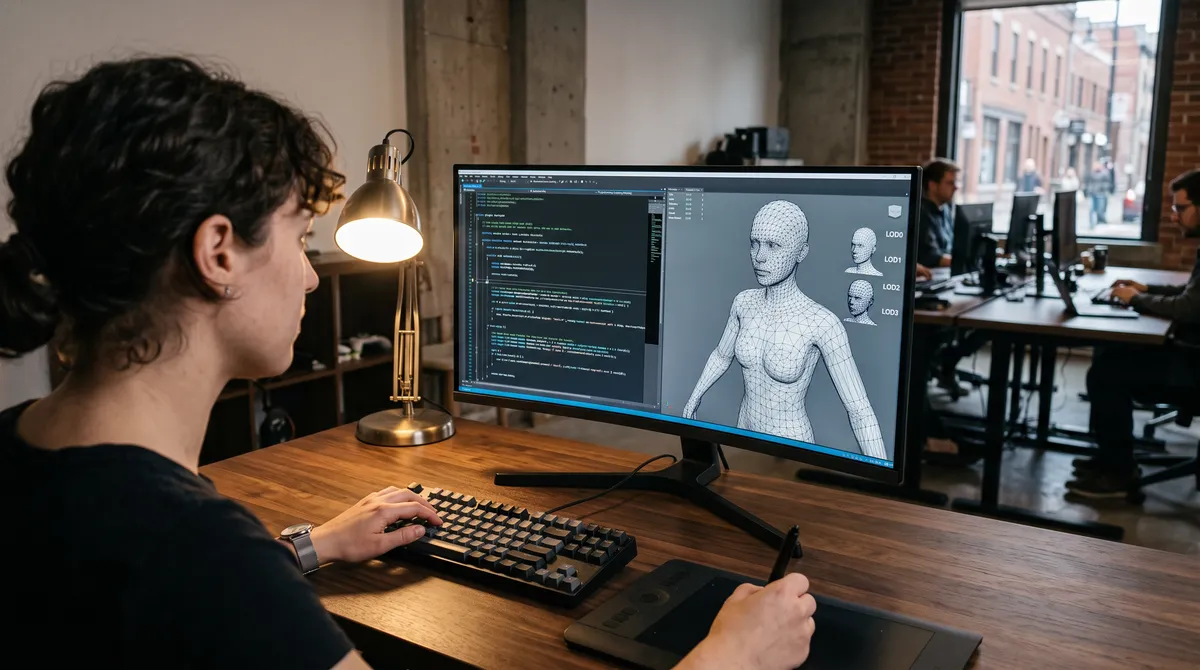
- Headless Pipeline Integration: Technical artists and pipeline engineers are deploying headless DCC (Digital Content Creation) automation scripts using Python and USD (Universal Scene Description) frameworks to automate LOD (Level of Detail) generation and texture compression.
- Lean Release Engineering: Build pipelines now utilize distributed compilation caching (such as IncrediBuild or FastBuild) to decrease build iteration times and allow rapid continuous integration cycles for large-scale 3D projects.
Strategic Takeaways for Engineering Leadership
Navigating the current Canadian tech landscape requires prioritizing core engineering discipline, infrastructure sovereignty, and deterministic automation. Investing in self-hosted open-source models, sandboxed agentic pipelines, and custom build toolchains provides the strongest foundation for operational stability.
How is your organization adapting its infrastructure architecture, CI/CD evaluation pipelines, or build toolchains to meet these technical requirements this quarter?