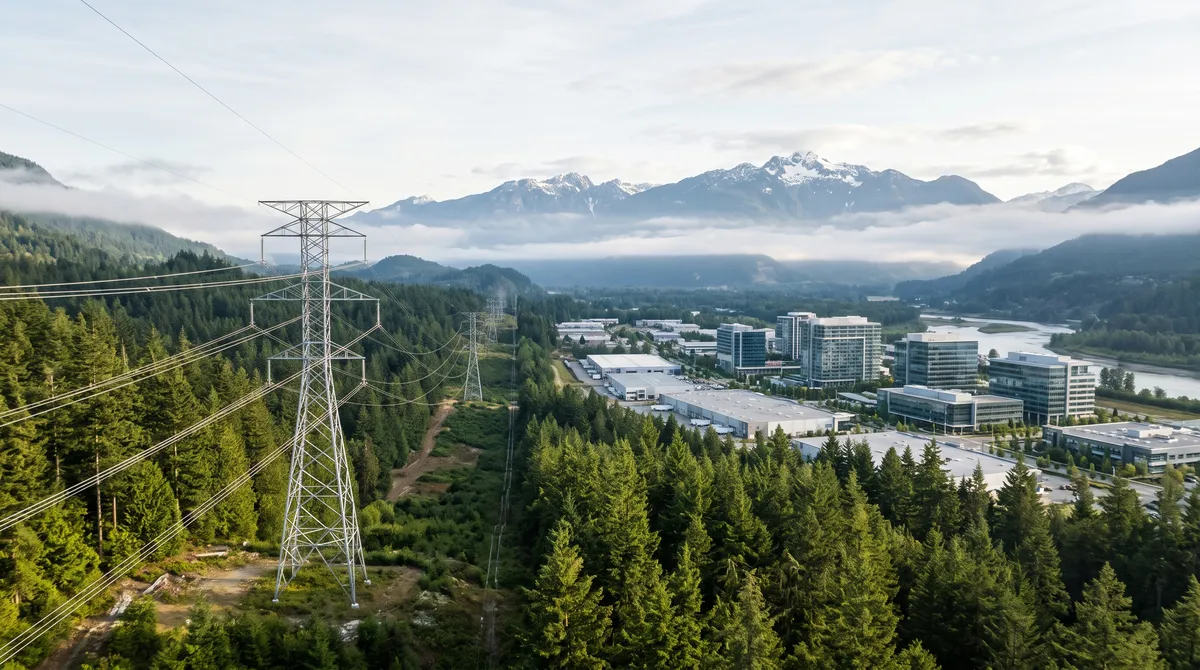
The North American software architecture landscape and Canadian technology operations face a structural realignment governed by capital allocation, power grid limits, and cloud capacity bottlenecks. In late October 2026, the Canadian federal government announced its record $750 million CAD Venture Capital Catalyst Initiative (VCCI) commitment, while British Columbia’s infrastructure debate escalated over AI data center power grid access. Concurrently, public filings revealed that major AI labs are encountering severe compute capacity constraints across tier-one hyperscalers.
These developments signal a shift from unconstrained cloud scaling toward strict FinOps discipline, localized hardware strategies, and sovereign capital management across enterprise software engineering.
1. Federal $750M CAD VCCI Allocation Shifts Capital to Growth-Stage Canadian Tech
On October 23, 2026, the Canadian federal government finalized a record $750 million CAD commitment through the Venture Capital Catalyst Initiative (VCCI). Designed to counter the departure of high-growth ventures to foreign markets, the allocation directs $675 million CAD to late-stage growth funds and $75 million CAD to pre-seed and seed streams, leveraging expected 3:1 private institutional co-investments to anchor scaling tech companies domestically.
For software architects, CTOs, and engineering directors, this capital injection changes the unit economics of scaling software products in Canada. Late-stage funding conditions now require engineering teams to prove path-to-profitability, operational efficiency, and strict FinOps practices before securing expansion rounds.
- FinOps and Cost Governance: Engineering leadership must demonstrate clear unit-cost optimization across cloud infrastructure, directly tying architectural decisions (such as database query optimization, cold-storage tiering, and microservice consolidation) to gross margin improvements.
- Talent Retention and Engineering Scale: With $675 million CAD allocated specifically to growth-stage funds, domestic firms are expanding senior systems engineering, platform reliability, and data engineering roles in Toronto, Vancouver, and Montreal.
- Pre-Seed Engineering Pipelines: The $75 million CAD pre-seed stream provides non-dilutive support for early proof-of-concepts, enabling early-stage teams to build robust system architectures on open-source stacks prior to commercial scaling.
2. British Columbia AI Data Center Grid Constraints Force Hybrid and Edge System Redesigns
As tech giants expand physical infrastructure across Western Canada, British Columbia's October 2026 political debates brought AI data center power consumption into sharp focus. With provincial energy providers analyzing extreme demand projections from proposed computing facilities, policymakers are proposing mandatory water efficiency standards, local grid impact reporting, and strict power allocation quotas.
Software architects building high-throughput pipelines can no longer assume infinite, low-cost cloud compute capacity. Systems must be engineered to operate within power-constrained environments and regional energy budgets.
- Heterogeneous and Quantized Computing: Backend teams are replacing full-precision model pipelines with quantized runtimes (e.g., AWQ, GGUF) and specialized ARM-based compute nodes, achieving up to 40% reductions in power and memory consumption per API transaction.
- Edge Processing and Data Sanitization: To minimize raw data transmission to central data centers, architectures are shifting ingestion, filtering, and feature extraction to localized edge nodes, reducing central server load and grid draw.
- Energy-Aware CI/CD Execution: Build pipelines are adopting energy-aware scheduling, running heavy integration tests, compilation builds, and batch analytics during off-peak energy hours or within availability zones powered by renewable grids.
3. Hyperscale Capacity Bottlenecks Drive Enterprise Adoption of Multi-Cloud and Local Inference
In October 2026, major S-1 draft filings and market disclosures revealed that top-tier AI labs—including Anthropic—are struggling to secure sufficient GPU compute capacity despite committing hundreds of billions of dollars to AWS, Google Cloud, and Microsoft Azure. Hyperscalers are increasingly capping capacity or prioritizing internal workloads, forcing enterprise engineering teams to re-evaluate single-cloud dependencies.
This capacity crunch is driving a shift away from single-vendor API integrations toward multi-cloud architectures, private compute clusters, and self-hosted open-weights inference setups.
- Self-Hosted Containerized Inference: Platform teams are deploying open-weights models (such as Llama 3.3 and Mistral) on dedicated vLLM or TensorRT-LLM runtimes hosted on private Kubernetes clusters, eliminating public cloud API rate limits.
- Multi-Cloud Failover Routings: API gateways are being configured with dynamic failover algorithms that route inference workloads across multiple cloud providers based on real-time capacity, latency, and spot-instance pricing.
- Abstraction Layer Standardization: Engineering teams are enforcing strict model-agnostic abstraction layers (such as LiteLLM or custom middleware), preventing vendor lock-in and allowing seamless switching between cloud APIs and local infrastructure.
Strategic Questions for Engineering Leadership
Navigating current industry realities requires balancing capital efficiency, power grid constraints, and cloud capacity limits. Engineering teams must prioritize resilient architectures, sustainable infrastructure, and deterministic execution.
How is your technical team updating its cloud infrastructure, energy governance, and multi-vendor strategies to meet these operational requirements this quarter?